
Topical Studies
-
Evidence with Integrity: Historical anchors and textual reliability

The integrity of biblical evidence is a cornerstone for understanding the historical context and reliability of Scripture, as affirmed in 2 Timothy 3:16, which declares that all Scripture is given by inspiration of God. This divine authorship not only imparts authority but also ensures that the truths contained therein endure through time, as 1 Peter…
-
Lives That Witness: Leadership, courage, and repentance

Leadership within the church is a sacred calling, as articulated in 1 Timothy 3:1, where the aspiration to oversee the flock is deemed a noble pursuit. This divine appointment carries a weight of responsibility, emphasizing the need for wisdom and integrity, as Proverbs 11:14 reminds us: “In the multitude of counselors there is safety.”
-
Stones and Scripture: Text and terrain: Scripture in its world

The relationship between Scripture and its historical context is vital for understanding its messages, for all Scripture is given by inspiration of God and is profitable for doctrine, reproof, correction, and instruction in righteousness (2 Timothy 3:16). The living Word of God, sharper than any two-edged sword, discerns the thoughts and intents of the heart…
-
Holiness and grace in redemptive history

The covenant, a sacred agreement between God and His people, reveals the depth of divine commitment and mercy throughout Scripture. In Genesis 9:12, the Lord establishes His covenant with Noah, marked by the rainbow as a sign of His enduring promise never to destroy the earth by flood again.
-
Holiness and Grace: Holiness and grace in redemptive history

The interplay of holiness and grace is a profound theme woven throughout redemptive history, revealing the character of God and His dealings with mankind. In Exodus 34:6-7, the Lord proclaims Himself as merciful and gracious, yet also just, underscoring the necessity of holiness in His divine nature.
-
The Certainty of Promise: Prophecy and the Unwavering Faithfulness of God

Prophecy serves as a divine assurance of God’s unwavering faithfulness, illuminating the path of faith and obedience for believers. As articulated in 2 Peter 1:19-21, the prophetic word is likened to a lamp that shineth in a dark place, guiding the faithful amidst uncertainty.
-
Covenant and Kingdom: Obedience rooted in grace and truth
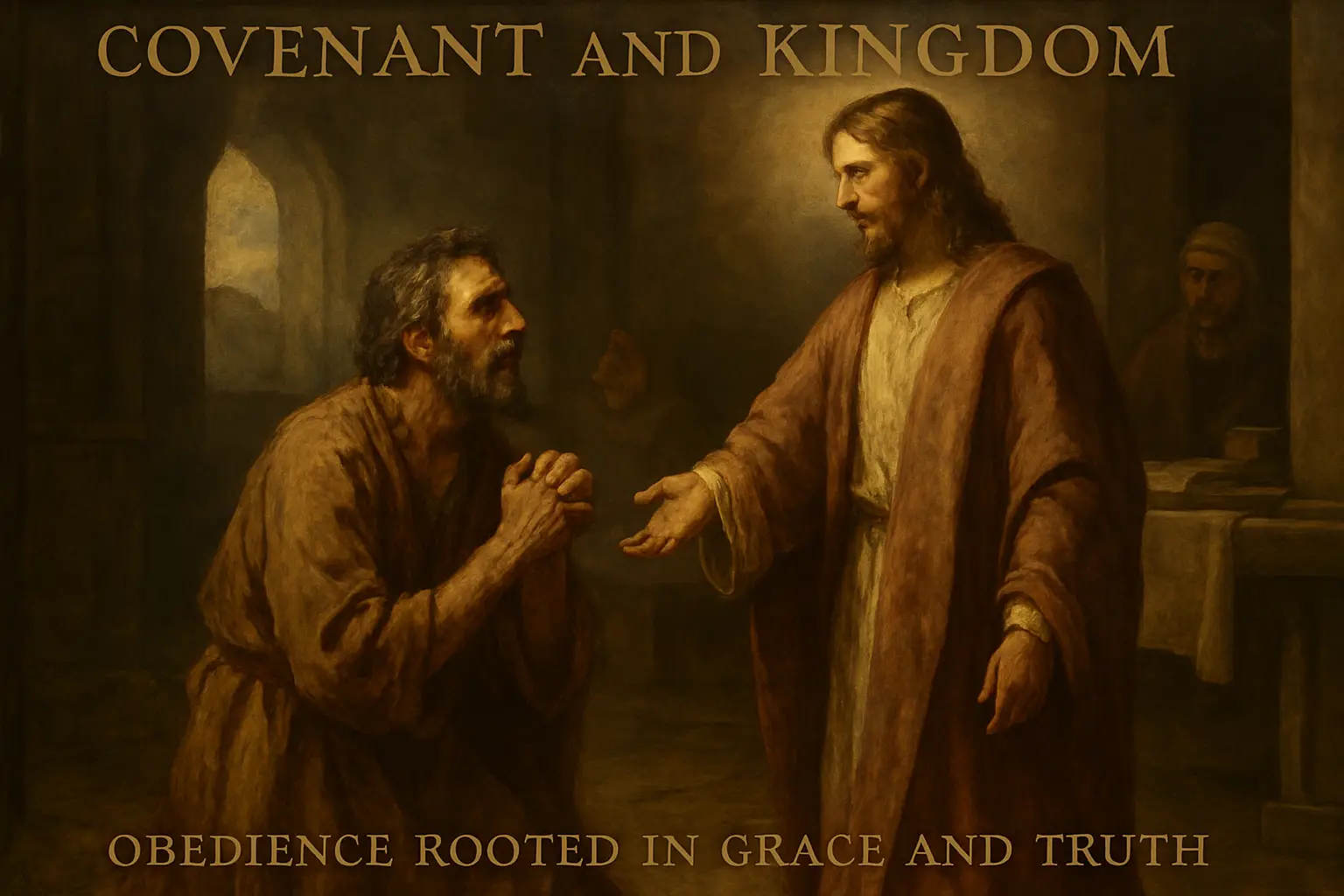
The sure foundation of faith and obedience is rooted in the unerring nature of God’s Word, which serves as a guiding light for believers amid life’s uncertainties. As Peter affirms, the prophetic word is more than mere human insight; it is divinely inspired and attests to God’s faithfulness in revealing His truth through Scripture (2…
-
Watchfulness and Hope: Grace, faith, and gospel assurance

The trustworthiness of God’s Word is foundational for faith and obedience, as articulated in 2 Peter 1:19-21, where the prophetic word is described as a lamp shining in a dark place. Prophecy serves not as a sensational spectacle but as a testament to God’s unwavering faithfulness, revealing His sovereign plan throughout history. The coherence of…
-
Trusting the Promises: Typology and the unity of the biblical canon

The significance of prophecy in the life of faith cannot be overstated, for it serves as a divine beacon, guiding believers toward the fulfillment of God’s sovereign plan. According to 2 Peter 1:19-21, prophecy is not born of human will, but is inspired by the Holy Ghost, thereby affirming Scripture’s coherence and the faithfulness of…
-
Holiness in Practice: Courage and conscience under pressure

In the pursuit of truth and understanding, the Scriptures stand as the ultimate authority, guiding the hearts and minds of believers. As stated in 2 Timothy 3:16, “All scripture is given by inspiration of God, and is profitable for doctrine, for reproof, for correction, for instruction in righteousness,” affirming the divine origin and purpose of…
